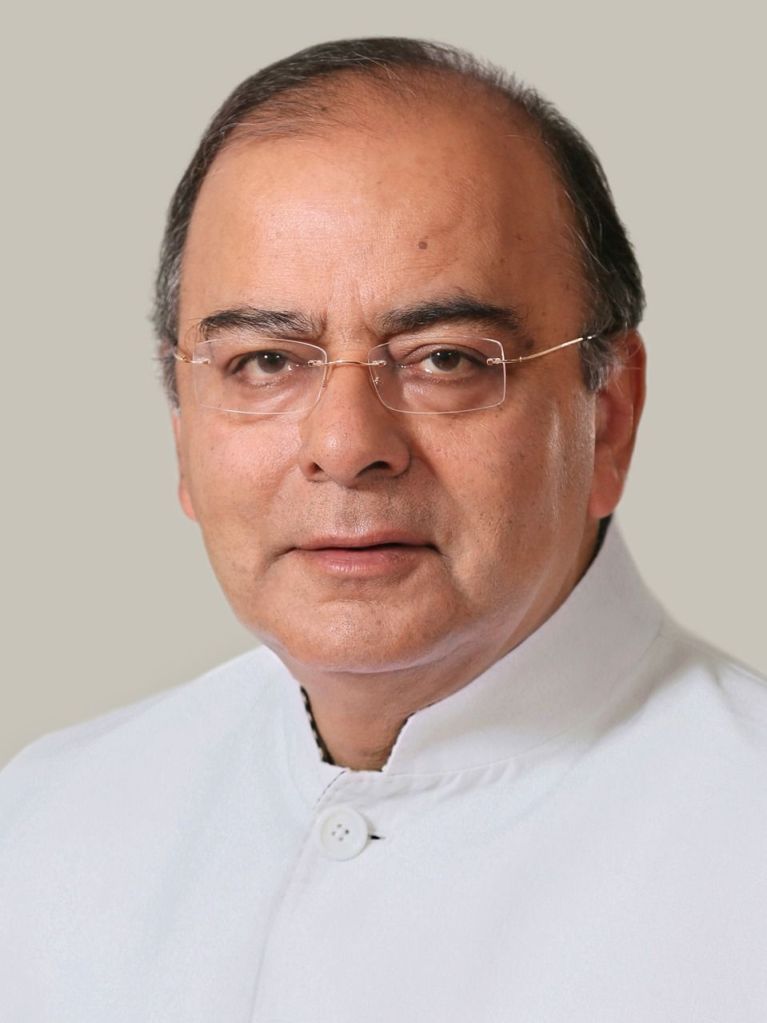
Arun Jaitley’s Death Anniversary: Between Legacy and Criticism
By Advocate Amaresh Yadav, Supreme Court of India
Today marks the death anniversary of Arun Jaitley — a leader remembered as an eloquent parliamentarian, a sharp legal mind, and one of the key strategists behind the Bharatiya Janata Party’s (BJP) rise to power. Yet, in a democracy, true remembrance demands more than tribute. It requires critical reflection on both contributions and controversies.
1. The Lawyer-Politician Dilemma
One of the most persistent criticisms of Jaitley was his dual role as a senior advocate and a public politician. While in opposition, he vehemently attacked the UPA government over alleged irregularities in coal block allocations. At the same time, he was reported to have provided legal opinions supporting corporate clients involved in the same process.
This raised questions of political ethics: Can a politician separate private legal advocacy from public accountability without undermining moral credibility?
2. Insensitive Remarks
In 2012, following the Delhi gang rape incident, Jaitley referred to it as “a small incident of rape.” The remark triggered outrage across society and the opposition, who accused him of trivializing one of the darkest moments in the country’s social fabric. For a leader of his stature, such words revealed the dangerous gap that often exists between political rhetoric and social sensitivity.
3. Confrontation with the Judiciary
Jaitley’s criticism of the Supreme Court judgment striking down the National Judicial Appointments Commission (NJAC) was another flashpoint. By calling the verdict “perverse”, he invited not only political backlash but also legal proceedings under sedition laws. While his critique reflected frustration over judicial supremacy in appointments, it also raised concerns about whether constitutional boundaries were respected in his rhetoric.
4. Ideological Ambiguity
Wikileaks once quoted Jaitley as describing Hindutva as “opportunism” for the BJP rather than ideological commitment. For a party deeply rooted in its ideological identity, this statement sparked discomfort. It highlighted Jaitley’s image as more of a pragmatic strategist than a firm ideological leader, which made him indispensable to the BJP’s expansion but also left him open to charges of inconsistency.
5. Accusations on Farmer and Land Policies
From land acquisition reforms to the contentious farm laws, Jaitley was often accused by opposition leaders of pushing policies perceived as anti-farmer. His political image was that of an efficient implementer of government decisions, but one who prioritized economic reforms and corporate concerns over grassroots sensitivities.
Conclusion
Arun Jaitley’s political journey reflects the paradox of Indian public life. He was admired for his legal brilliance, parliamentary sharpness, and organizational skill. Yet, he was equally criticized for ethical ambiguities, insensitive remarks, and ideological flexibility.
On his death anniversary, the democratic way to remember him is not only by offering tributes but also by acknowledging the critical lessons his career leaves behind:
- That political ethics cannot be divorced from professional roles.
- That language in public life must carry sensitivity.
- And that strategic pragmatism, without ideological clarity, often leaves a leader open to enduring criticism.
Arun Jaitley, therefore, remains a complex figure in Indian politics — celebrated for his intellect, yet remembered equally for the controversies that shaped his public life.
Amaresh Yadav
 Amaresh Yadav
Leave a comment