Legal Opinion: Constitutional Powers of the Election Commission of India
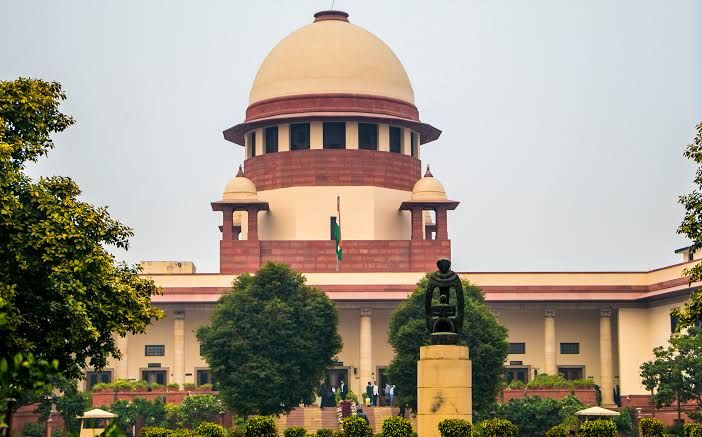
By Advocate Amaresh Yadav, Supreme Court of India
The Election Commission of India (ECI) stands as one of the most crucial constitutional institutions safeguarding the democratic process of the Republic. Its authority, autonomy, and accountability have been repeatedly tested before constitutional courts. This opinion seeks to consolidate the constitutional framework, statutory limits, judicial interpretation, and guiding principles which together define the ECI’s powers under Indian law.
I. Constitutional Foundation
The starting point of any analysis is Article 324 of the Constitution, which vests in the Election Commission the “superintendence, direction and control of the preparation of the electoral rolls and the conduct of elections” to Parliament, State Legislatures, and the offices of President and Vice-President.
Articles 325 and 326 secure universal adult suffrage and prohibit discriminatory exclusion from electoral rolls on grounds such as religion, race, caste, or sex.
Articles 327 and 328 empower Parliament and State Legislatures to legislate on elections — yet these provisions operate subject to the overriding constitutional mandate of Article 324.
II. Nature and Scope of Powers
The Supreme Court has consistently described Article 324 as a reservoir of plenary powers, to be invoked whenever statutory provisions are silent or inadequate. However, the Commission cannot transgress express legal provisions.
- Exclusive Constitutional Domain – The ECI is the sole authority in matters concerning the conduct of free and fair elections.
- Supplement, Not Supplant – In Mohinder Singh Gill v. Chief Election Commissioner (1978), the Court held that Article 324 allows the ECI to fill legislative gaps, but not to contravene statutory commands.
- Plenary Powers in Contingency – Recognised in Kanhiya Lal Omar v. R.K. Trivedi (1985), these powers address unforeseen electoral exigencies.
- Natural Justice and Bona Fide Exercise – ECI’s discretion is not unfettered; it must act fairly, transparently, and in good faith.
- Judicial Deference – Courts ordinarily refrain from interfering mid-election, as per Article 329, except in post-election disputes or where fundamental rights are demonstrably violated.
III. Functional Competence
Administrative: Delimitation (subject to law), electoral roll preparation/revision, appointment of observers, recognition/allotment of symbols, enforcement of the Model Code of Conduct, and oversight of election expenditure.
Advisory: Recommendations to the President or Governors on disqualification of legislators, and opinions sought in judicial proceedings concerning elections.
Quasi-Judicial: Determining disputes on party recognition and symbol allotment.
Emergency Powers: Ordering repolls, countermanding elections in cases of large-scale rigging or booth capturing.
IV. Judicial Principles – Key Precedents
- Mohinder Singh Gill v. Chief Election Commissioner (1978) – Article 324 is to be interpreted broadly; ECI can act in areas ungoverned by legislation.
- Lakshmi Charan Sen v. A.K.M. Hassan Uzzaman (1985) – Courts must trust ECI’s discretion in electoral roll management.
- Kanhiya Lal Omar v. R.K. Trivedi (1985) – ECI can issue executive instructions where law is silent.
- Election Commission v. Ashok Kumar (2000) – Judicial review during an ongoing election process is highly restricted; intervention is warranted only in cases of gross illegality.
V. Recent Application – Special Intensive Revision (Bihar Case)
In the matter of Special Intensive Revision (SIR) of electoral rolls in Bihar, the Supreme Court reaffirmed that timing and manner of revision are matters within ECI’s exclusive domain. Courts will only intervene if procedural irregularities lead to a clear violation of constitutional rights.
VI. Guiding Doctrines
- Presumption of Legality: Every ECI action is presumed valid unless proven mala fide or ultra vires.
- Doctrine of Necessity: Enables ECI to act even in absence of statutory guidance, to preserve electoral integrity.
- Proportionality & Fairness: Any restriction or action must be proportionate to the aim of ensuring free and fair elections.
Conclusion
The Election Commission’s powers are both vast and constitutionally protected, designed to secure the sanctity of the electoral process. The Supreme Court’s jurisprudence has maintained a delicate balance — shielding the ECI’s independence while ensuring accountability to constitutional norms and natural justice.
As a constitutional practitioner, I must emphasise that the strength of our democracy depends not only on the legal armour of the ECI but also on its moral courage to act impartially in the face of political pressure. Where the law is silent, Article 324 breathes life; where the law speaks, the Commission must listen.
— Advocate Amaresh Yadav
Supreme Court of India
Amaresh Yadav
 Amaresh Yadav
Leave a comment