Legal Opinion on the Recognition and Rights of the Siddi Community in Light of the Lokur Commission and Constitutional Mandates
By: Advocate Amaresh Yadav
Supreme Court of India
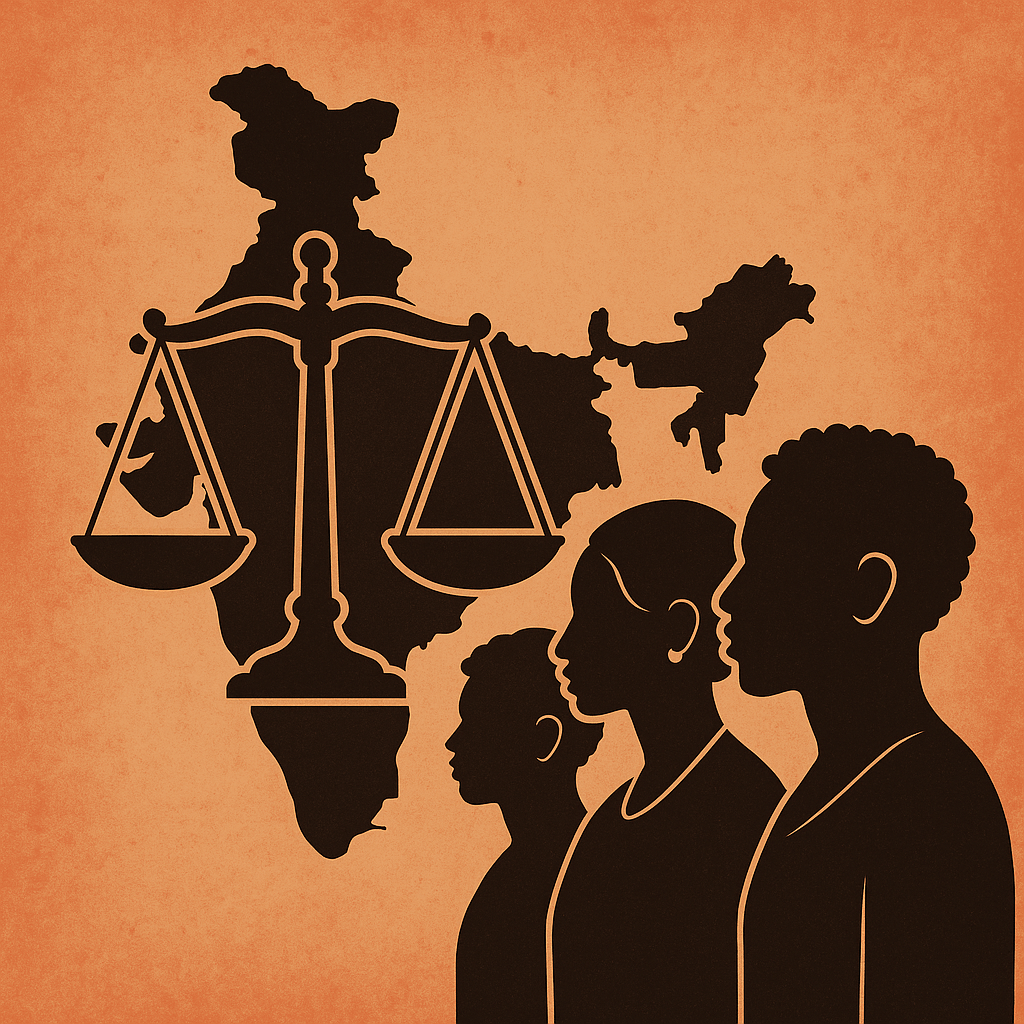
I. Introduction
The Siddi community, of African origin but Indian by domicile and culture, represents a historically marginalised population in India. Though settled for centuries in states like Karnataka, Goa, Gujarat, and Maharashtra, the Siddis have faced a consistent lack of formal recognition and social mobility.
The Lokur Commission (1965)—a pivotal constitutional body—had strongly recommended their inclusion in the Scheduled Tribes (ST) list. However, in practice, this recognition remains fragmented and partial, leading to continued socio-economic injustice and legal ambiguity.
II. Constitutional and Legal Framework
Articles Involved:
- Article 14: Right to Equality
- Article 15(4) and 16(4): Special provisions for socially and educationally backward classes
- Article 21: Right to life with dignity
- Article 342: Identification of Scheduled Tribes
- Article 46: Promotion of educational and economic interests of Scheduled Castes, Scheduled Tribes, and other weaker sections
These provisions create a mandate—not merely an option—for the state to recognise, uplift, and protect disadvantaged groups such as the Siddis.
III. Role of the Lokur Commission (1965)
The Lokur Committee, headed by Justice B. D. Lokur, set out five key indicators to define a community as a Scheduled Tribe:
- Primitive traits
- Distinctive culture
- Geographical isolation
- Shyness of contact with the larger community
- Backwardness
The Siddi community—due to their distinct Afro-Indian heritage, low literacy, economic exclusion, and lack of integration with dominant groups—clearly met these criteria. Accordingly, the Commission recommended ST status for Siddis, especially in regions like Karnataka and Goa.
IV. Unequal Implementation and Legal Gaps
Despite these recommendations:
- Siddis were recognised as Scheduled Tribes in Karnataka (2003).
- In Goa, Gujarat, and Maharashtra, they continue to be classified inconsistently—either as OBC or unlisted, denying them full tribal welfare benefits.
This regional disparity violates:
- The Right to Equality under Article 14, by creating unequal legal status for the same community across state lines.
- The spirit of Article 342, which was meant to enable context-based but just recognition.
- The Directive Principles under Article 46, which remain unfulfilled in substance.
V. Sociological Context and Recommendations
A sociological lens reveals deeper layers of exclusion:
1. Racial Isolation & Cultural Invisibility:
The Siddis often face racial discrimination, including stereotyping due to their African physical features, which exacerbates their social isolation.
2. Economic Deprivation:
Most Siddis live in forest or rural belts, surviving on subsistence agriculture or manual labor, with minimal land ownership or access to credit.
3. Educational Backwardness:
Literacy rates among Siddis are well below state and national averages, with female education particularly lacking. Language barriers and geographic isolation further restrict access to education.
4. Lack of Political Representation:
Siddis are politically invisible, with negligible representation in panchayats or state assemblies. Their cultural leaders are often informal and unrecognised by state mechanisms.
Sociological Recommendations:
- Ethnographic Validation: A fresh, state-sponsored ethnographic study should reaffirm their tribal identity and marginalisation across all states.
- Cultural Integration, Not Assimilation: Welfare schemes must respect and preserve their unique Afro-Indian heritage rather than impose majoritarian norms.
- Affirmative Action with Dignity: Policies should affirm their rights, not treat them as mere beneficiaries, thereby enhancing self-representation.
- Community Leadership Support: Train and empower local Siddi youth to become community advocates, bureaucrats, and legal champions.
VI. Legal Remedy Suggested
Given the unequal legal classification of the same community across different states, the following remedies are viable:
1. Constitutional Writ Petition (Article 32 or 226):
A petition can be filed before the Supreme Court or concerned High Courts challenging the non-uniform recognition and seeking a direction to the Union Government to grant pan-India ST status to Siddis under Article 342.
2. Representation to NCST and Ministry of Tribal Affairs:
A structured legal representation with evidence from Lokur Commission, state surveys, and sociological studies can be submitted demanding uniform recognition.
3. PIL for Policy Reform:
A Public Interest Litigation can push for a national policy that prevents such arbitrary and fragmented recognition of tribal communities.
VII. Conclusion
The Siddi community remains a glaring example of the failure of constitutional justice in practice. While India prides itself on unity in diversity, the case of the Siddis reflects invisibility in diversity.
The Lokur Commission laid the legal and factual groundwork for their inclusion in 1965. 58 years later, justice delayed must not become justice denied.
It is time to bridge the gap between constitutional vision and executive action, and ensure that no Indian—regardless of race, geography, or origin—is left behind in the quest for dignity and equality.
Issued under legal consultation and sociological reflection
—Advocate Amaresh Yadav
Supreme Court of India
Amaresh Yadav
 Amaresh Yadav
Leave a comment