Why Banning Bike Taxis is Legally Unsound and Socially Unjust
By Advocate Amaresh Yadav | Legal Blog Opinion
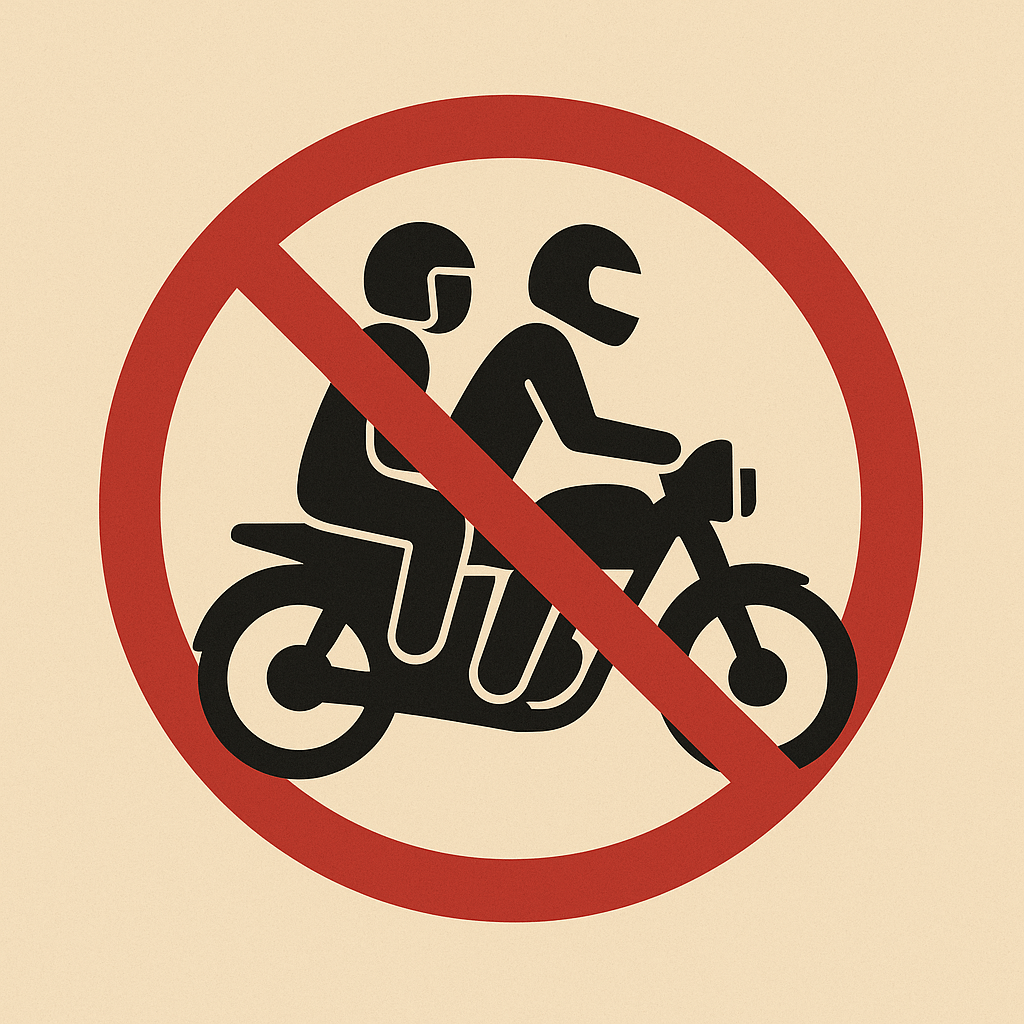
In recent months, several Indian states have moved to ban or restrict bike taxi services like Rapido, Ola Bike, and UberMoto, citing “safety concerns” and “regulatory ambiguities.” However, these justifications barely mask what is, in essence, a regressive policy decision that impacts both livelihoods and constitutional rights. As a practicing advocate, I believe it’s imperative to unpack the legal, social, and policy flaws in such decisions.
⚖️ Legal Perspective: Arbitrary Action Violates Article 14
At the heart of the issue is arbitrariness. Article 14 of the Constitution guarantees equality before law and protection against arbitrary state action. If private individuals are permitted to ride pillion on motorcycles, then prohibiting the same act solely because it involves a commercial exchange (payment of fare) is illogical and discriminatory.
Such a ban lacks intelligible differentia and rational nexus — two essential requirements laid down by the Supreme Court in State of West Bengal v. Anwar Ali Sarkar and EP Royappa v. State of Tamil Nadu.
💼 Right to Livelihood: Article 19(1)(g) at Stake
Bike taxis have become a critical source of income for lakhs of gig workers, many of whom are youth, migrants, and low-income individuals. Article 19(1)(g) provides every citizen the right to practise any profession or to carry on any occupation, trade, or business.
The Supreme Court has consistently held that this right cannot be curtailed without a compelling public interest and reasonable restrictions under Article 19(6). Banning bike taxis without providing a rational or safety-based framework fails this test.
Compare this with Indian Hotel & Restaurants Assn. v. State of Maharashtra (2013), where the Court struck down arbitrary restrictions on dance bars, observing that morality-based arguments cannot override the right to livelihood.
📱 Tech Platforms as Enablers, Not Threats
Platforms like Rapido and UberMoto have not only created jobs but have digitized informal employment, improved last-mile connectivity, and helped bridge urban transport gaps. They are in line with the Government of India’s own flagship initiatives — Digital India, Startup India, and Atmanirbhar Bharat.
It’s ironic, then, that state-level decisions now undermine this momentum — either due to bureaucratic inertia or pressures from traditional taxi and auto-rickshaw lobbies.
🛡️ Regulation, Not Prohibition: The Sensible Way Forward
Safety concerns are valid — but banning an entire industry is a lazy policy shortcut. The solution lies in regulation, not prohibition.
Some constructive measures could include:
- Mandatory helmet usage
- Verified driver IDs and background checks
- App-based ride tracking and SOS features
- Third-party insurance cover
- Training modules for drivers
The Motor Vehicles (Amendment) Act, 2019 empowers states to regulate aggregators under Section 93. Instead of imposing bans, states should use this legislative power to design safe and inclusive regulations.
🧾 What the Courts Can Do
Judicial review is essential. Several affected riders and platforms have already approached High Courts. In 2023, the Delhi High Court rightly asked the Transport Department to reconsider its position on bike taxi bans, stating that the absence of a regulatory policy does not mean a carte blanche ban is justified.
Future challenges must invoke Article 14, 19(1)(g), and 21 (Right to Life with Dignity) — all of which are adversely impacted by such blanket prohibitions.
📝 Conclusion: Law Must Enable, Not Suppress
India’s legal framework should not be used to block innovation or employment. Banning bike taxis is not a safety move — it’s a social and legal injustice. It harms those at the margins of the economy and denies mobility to those who can least afford alternatives.
As a lawyer and citizen, I urge policymakers to reform, not repress. Urban transport policy must evolve with technology — not turn its back on it.
Let’s regulate smartly, not ban blindly.
About the Author:
Advocate Amaresh Yadav is a practicing lawyer at the Delhi High Court and Supreme Court of India. He writes on constitutional rights, technology law, and public policy with a focus on social justice.
Amaresh Yadav,
 Amaresh Yadav
Leave a comment