⚖️ “No Consent Below 18: Why POCSO’s Clarity Must Not Be Compromised”
By Advocate Amaresh Yadav, Supreme Court of India
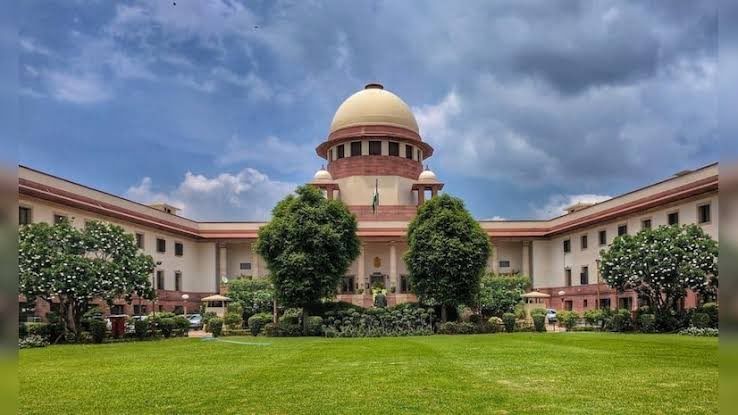
The Judgment That Stirred a Storm
The recent Supreme Court judgment dated May 23, declining to impose a sentence on a man convicted under the POCSO Act, invites deep legal and constitutional scrutiny. While the apex court reaffirmed the settled legal position that “consensual sex” with minors is not recognized under POCSO, it nonetheless refused to punish the convicted accused—citing the victim’s post-incident suffering and lack of perception of crime. This decision, though rooted in compassion, borders dangerously on legal inconsistency.
POCSO Is Not Just a Law, It’s a Declaration of Non-Negotiable Child Protection
The Protection of Children from Sexual Offences Act, 2012 is crystal clear: any sexual act involving a minor is illegal, regardless of consent. The rationale is grounded in the assumption—legally and developmentally—that a child below 18 is incapable of informed consent. It is a strict liability law designed to protect minors, especially girls, from manipulation and exploitation masquerading as relationships.
The Supreme Court has previously held (e.g., Independent Thought v. Union of India, 2017) that constitutional morality must trump personal, cultural, or social justifications when it comes to child rights.
Judicial Discretion vs. Legislative Mandate: A Dangerous Drift
In this case, the Court appears to have exercised humanitarian discretion over legal obligation, choosing not to sentence a convicted man. It is important to note:
- Conviction was upheld.
- But punishment was withheld, based on a victim-impact report and expert panel findings suggesting systemic failures and recommending family reintegration.
This is a dangerous precedent. If empathy begins to erode enforceability, POCSO risks becoming a suggestive, not mandatory, statute. The Court must not allow victim sympathy to weaken the legislative clarity that minors must be protected irrespective of personal views or mutual affection.
The “Collective Failure” Argument: Valid But Misapplied
The expert panel’s report rightly points out systemic failures—lack of shelters, legal aid, and rehabilitation support. But to stretch this into avoiding punishment for a sexual offence is constitutionally flawed. The failure of the state to support the victim cannot become the basis for absolving the offender.
Justice must be victim-centric, but not victim-dependent. The law must protect even those who don’t realize they need protection.
Social Commentary and “Adolescent Sexuality” – Judicial Overreach?
The Court’s language discussing “adolescent sexuality”, peer pressure, and even climate change reflects an unfortunate drift from legal analysis to sociological commentary. Courts are meant to interpret laws, not rationalize exceptions based on shifting cultural norms.
Such reasoning risks legitimizing grooming behavior and opens the gates for accused persons to claim emotional or consensual relationships with minors, bypassing the statute.
The Balanced Path Forward
Let us be clear: Justice does not demand rigidity, but it demands consistency.
✅ Yes, victims must be supported holistically.
✅ Yes, criminal justice must not traumatize.
❌ But no, legal standards cannot be bypassed on compassionate grounds when the offence is proven.
The remedy lies not in weakening POCSO, but in strengthening institutional support systems, educating adolescents, and speeding up child-sensitive justice delivery.
Final Word
As a practitioner before the Hon’ble Supreme Court, I respectfully submit that this deviation must remain an aberration, not a precedent. POCSO is one of the few laws where moral clarity meets legal certainty—we must not allow empathy to blur that line. Let the legislature reform, if necessary—but let not judicial interpretation dilute a child’s shield in the name of discretion.
Advocate Amaresh Yadav
Supreme Court of India
9953084083
 Amaresh Yadav
Leave a comment