ED Must Reboot: Supreme Court’s Censure Signals Urgent Need for Reform
By Advocate Amaresh Yadav
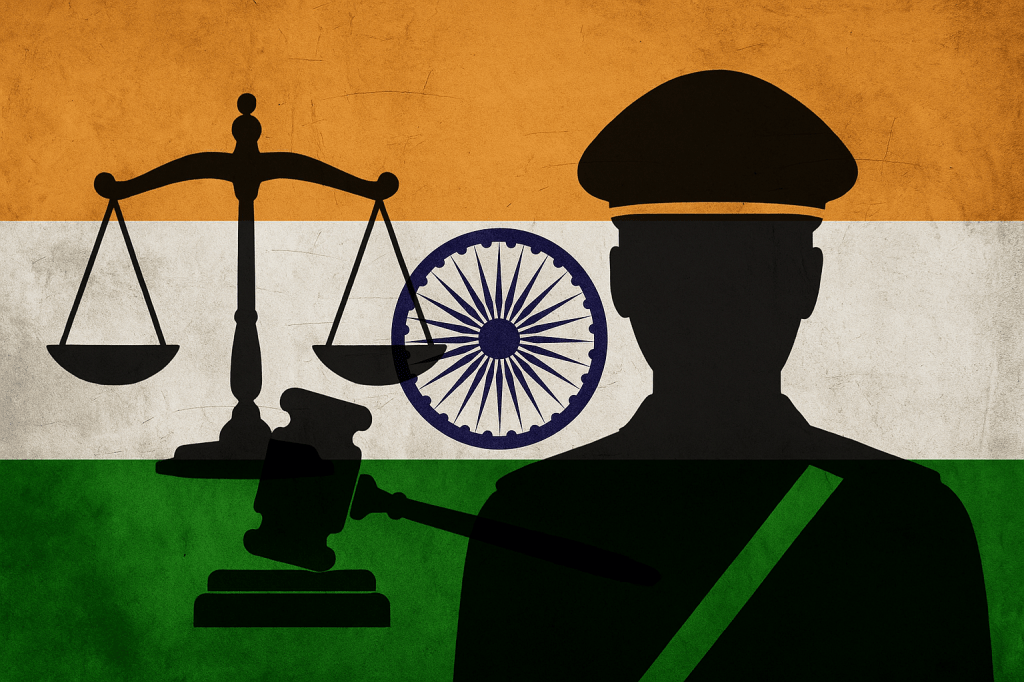
The recent censure of the Enforcement Directorate (ED) by the Hon’ble Supreme Court in the TASMAC case marks more than a judicial rebuke — it is a call for institutional introspection. The apex court stayed the ED’s probe into money laundering linked to Tamil Nadu’s state-run liquor corporation, TASMAC, finding that the central agency had overstepped its jurisdiction and undermined the federal structure.
This development adds to a growing body of judicial concerns about the ED’s functioning, with the Court now openly observing that the agency often weaponizes the legal process itself — using investigation as punishment.
Federalism and Overreach
India’s Constitution is federal in spirit and structure. Subjects such as police and public order fall under the State List. By inserting itself into a state-level investigation without establishing clear jurisdictional grounds, the ED appears to have acted in violation of this constitutional scheme.
The Supreme Court termed such intervention not only “unnecessary” but also in breach of the federal principle. This echoes its earlier stance in cases where it warned central agencies against functioning as instruments of political overreach.
As former Supreme Court judge Justice Madan Lokur rightly noted, “Federalism is not a slogan; it’s a safeguard.” When central agencies begin to disregard this balance, it raises serious alarms.
Due Process and the Danger of “Process as Punishment”
Article 21 of the Constitution guarantees not just life and liberty, but also due process of law. The Supreme Court has repeatedly highlighted that ED’s functioning — marked by arbitrary arrests, prolonged custody, and lack of transparency — turns process into punishment.
In the TASMAC case, the Court observed that the ED acted with disregard for standard procedure and appeared to rely on generalised accusations rather than specific evidence.
This pattern, also seen in the Chhattisgarh liquor case and others, reflects a deeper malaise: the misuse of coercive powers under the garb of anti-money laundering enforcement.
Selective Prosecution and Political Weaponization
Perhaps the gravest concern is the ED’s seeming pattern of selective targeting. According to a 2022 investigation by The Indian Express, over 95% of political leaders investigated by the ED since 2014 belong to Opposition parties. This figure cannot be dismissed as coincidence.
The principle of equality before the law (Article 14) demands uniform application of investigative scrutiny. Any perception of political bias not only undermines public trust but delegitimizes the agency itself.
As Senior Advocate Dushyant Dave observed, “The ED is becoming a political tool rather than a constitutional agency.” Courts can no longer afford to overlook this transformation.
Systemic Issues in ED’s Functioning
In its 2022 ruling in Vijay Madanlal Choudhary v. Union of India, the Supreme Court upheld key provisions of the PMLA but emphasized the need for transparency, accountability, and scientific investigation. Yet, the ED’s conviction rate remains below 1%, raising questions about the legitimacy and intent of its actions.
Despite repeated judicial warnings, the agency continues to act with opacity and high-handedness — prompting the apex court to once again step in.
The Way Forward: Institutional Reform
The solution is not to weaken the ED, but to restore its credibility. That requires:
- Amendment of the PMLA to bring in pre-arrest safeguards, time-bound investigations, and reverse burden provisions subject to judicial review.
- Parliamentary Oversight: A bipartisan oversight committee can audit the ED’s investigations, especially in politically sensitive cases.
- Independent Appointment Process: Just as the Election Commission is insulated from executive control, the ED should be brought under an autonomous appointment mechanism.
- Transparency Mandates: Regular publication of investigation data and conviction rates will ensure public scrutiny.
Conclusion
Accountability for corruption is non-negotiable. But that accountability must be achieved through constitutional means. The Supreme Court’s censure of the ED is a critical moment for Indian democracy — a reminder that even the most powerful institutions must operate within the bounds of law, liberty, and federalism.
It is time for the ED to pause, reflect, and reform.
Advocate Amaresh Yadav is a legal commentator and practising advocate at the Delhi High Court. He writes on constitutional law, civil liberties, and institutional reform.
Amaresh Yadav Supreme court of India
 Amaresh Yadav
Leave a comment