Supreme Court’s Verdict on Judicial Service Eligibility: A Victory for Legal Experience
By: Advocate Amaresh Yadav, Supreme Court of India
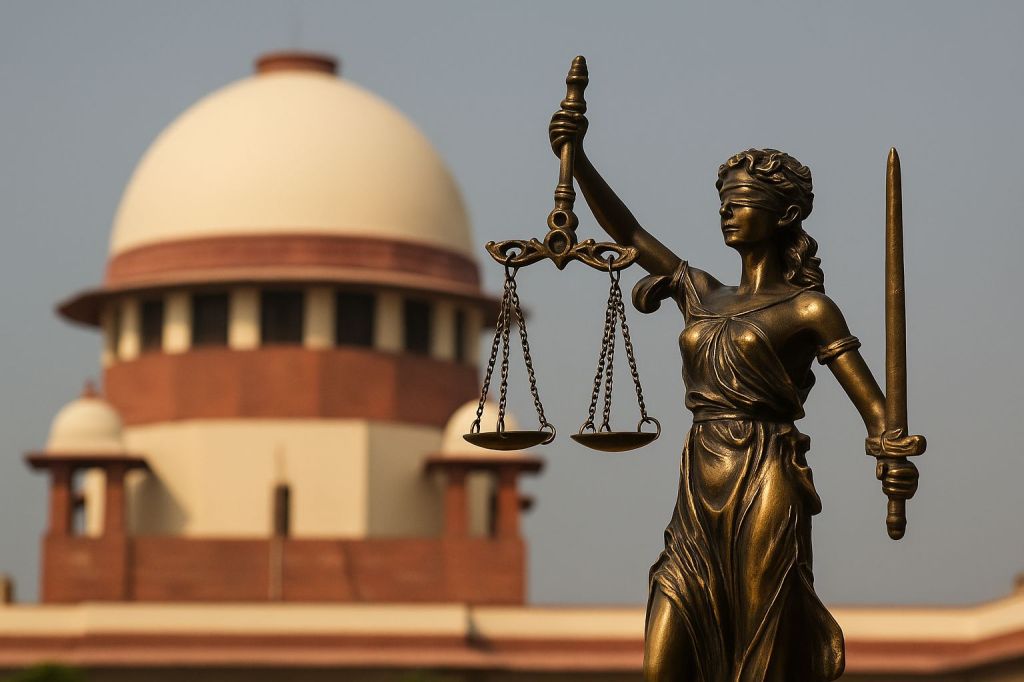
“A judge who has never stood before the Bench as an advocate cannot understand the pulse of justice.”
That line has echoed in court corridors for years—and on May 20, 2025, the Supreme Court gave it legal teeth.
In a landmark judgment, the Supreme Court of India has restored a critical eligibility condition for aspiring judges: a minimum of three years of legal practice before one can appear for entry-level judicial service exams. In simple terms—no more direct recruitment of fresh law graduates as civil judges. You must first walk the talk in court.
Why This Judgment Matters
For years, judicial service exams were open to fresh law graduates straight out of college. While this may have expanded access, it also meant that courtroom-inexperienced individuals were handed the responsibility to preside over trials involving life, liberty, and justice. Many couldn’t draft a basic bail order or manage a courtroom effectively in their early days.
As an advocate practicing in the Supreme Court, I’ve often seen these young judges struggle—not due to lack of intelligence, but a lack of real-world legal exposure. Imagine a surgeon who’s only read medical books but never held a scalpel. That’s how it felt.
What Did the Court Say?
Here’s a quick breakdown of the ruling:
- 3-Year Practice Rule: You must have practiced law for at least three years after enrolling with a Bar Council.
- Law Clerk Experience Counts: Time spent working as a law clerk to a judge can be counted toward this three-year requirement.
- Certificate of Practice: You’ll need a certificate from a senior advocate (with 10+ years’ experience) or a designated judicial officer.
- Not Retroactive: This applies to recruitment from May 20, 2025, onwards. Ongoing processes won’t be disrupted.
- Mandatory Training: Even after selection, you must undergo one year of training before sitting on the Bench.
- States Must Comply: The Supreme Court has directed all States and High Courts to revise their rules within three months.
A Judge Must First Be an Advocate
I have always argued that judges need to be nurtured from the field—not from classrooms alone. Law school teaches you the law, but not how to handle an aggressive counsel, a weeping victim, or a frustrated police officer on a bad day. Only experience in the trenches of the trial court can teach that.
This verdict reminds us: justice must not only be done, it must be understood. And understanding comes from doing.
What This Means for Aspiring Judges
To those in law schools who had hoped to jump straight into the judiciary: don’t be disheartened. This three-year practice is not a roadblock—it’s your foundation. It will make you a better judge. You’ll learn how lawyers build arguments, how judges think, and what justice looks like beyond textbooks.
As someone who once practiced in dusty district courts before reaching the Supreme Court, I can say with certainty: those three years will shape your entire career.
Final Thoughts
The judiciary is the last hope for many Indians. Every magistrate or civil judge represents that hope. With this verdict, the Supreme Court has ensured that only those who’ve lived the law will be trusted to interpret and enforce it.
As a legal community, we should welcome this reform. It’s not elitist—it’s essential.
— Advocate Amaresh Yadav
Supreme Court of India
 Amaresh Yadav
Leave a comment