“Fixers or Legal Luminaries? Revisiting the ‘Top 7’ through Tarun Gogoi’s Eyes”
By Advocate Amaresh Yadav
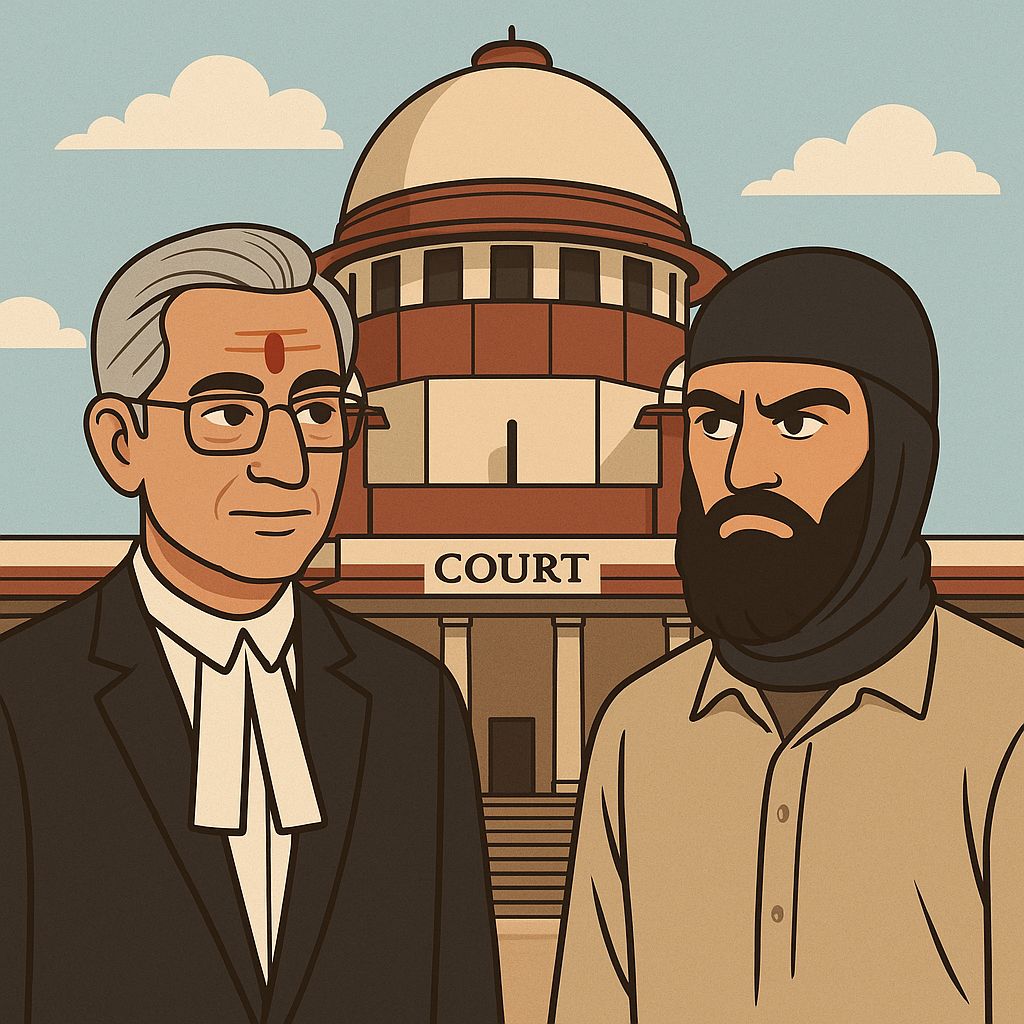
In the pantheon of Indian legal elites, names like Harish Salve, Mukul Rohatgi, and Abhishek Manu Singhvi are hailed as titans. Their accolades are countless, and their courtroom performances, often dazzling. But as someone who peers beyond legal gloss into the power structures that sustain it, I can’t help but recall the late Tarun Gogoi’s blunt characterisation: “fixers.” And in my mind, that label — uncomfortable though it may be — deserves to be interrogated, not dismissed.
The Cult of the “Top 7”
India’s legal system, plagued with pendency and inequality, often appears to be a system that works better for the powerful. In Indu Bhan’s Legal Eagles, seven lawyers are profiled — all of whom have represented the State, big corporations, or entrenched political interests. Their brilliance isn’t under question; their integrity, however, must not be immune to scrutiny.
Who benefits most from their advocacy? Who can afford them? Who do they choose to represent — and, more importantly, who do they never represent?
The answers to these questions shape my unease.
Tarun Gogoi’s Political Eye
Tarun Gogoi, former Chief Minister of Assam, was no stranger to Delhi’s legal-political circuit. When he referred to certain top lawyers as “fixers,” it was not a casual slur — it was an indictment of the cozy nexus between the bench, bar, and ruling establishments.
This wasn’t merely about corruption. It was about influence — a quiet shaping of verdicts, settlements, and outcomes through access, social capital, and strategic friendships. These advocates, with their direct lines to ministers, judges, and media houses, often serve as conduits of the status quo, not challengers of injustice.
Justice or Access?
Consider this: Can a poor farmer, a wrongfully arrested protestor, or a Dalit student who has been institutionally harassed even dream of approaching these “top” lawyers?
Most of them charge more for a single appearance than what a small farmer earns in a year. And yet, they are the ones shaping the country’s constitutional questions — often from a lens rooted in corporate comfort, not constitutional morality.
Are They Really the Best?
If “best” means courtroom theatrics, English fluency, and connections in high places, then yes — they are the best.
But if “best” means someone who stands with the powerless against the powerful, someone who fights for the invisible and the voiceless — then India’s real legal warriors remain unlisted, uncelebrated.
Fixers in Robes?
The term “fixer” may sound harsh — but it doesn’t imply illegality. It implies proximity. It implies influence-peddling masked as legal brilliance. It implies that in India, knowing the system matters more than knowing the law.
And when the same few names are parachuted into every high-stakes case — whether for the government, for billionaires, or for media tycoons — it becomes harder to separate merit from manipulation.
A Call for New Heroes
It is time we expand our legal imagination. The best advocates may not be in glossy books — they may be standing in trial courts, fighting pro bono, protecting tribal land, resisting illegal evictions, or taking on the might of corporations.
Let us look beyond the “Top 7.” Let us look at the tireless public defenders, the RTI activists, the human rights lawyers harassed by state agencies.
Only then can we start to dismantle the monopoly of Delhi’s fixers and build a judiciary that is truly democratic.
– Advocate Amaresh Yadav
For the people. Not just for the privileged.
 Amaresh Yadav
Leave a comment