Terror Laws or Tools of Suppression? Rethinking the Balance Between National Security and Human Rights
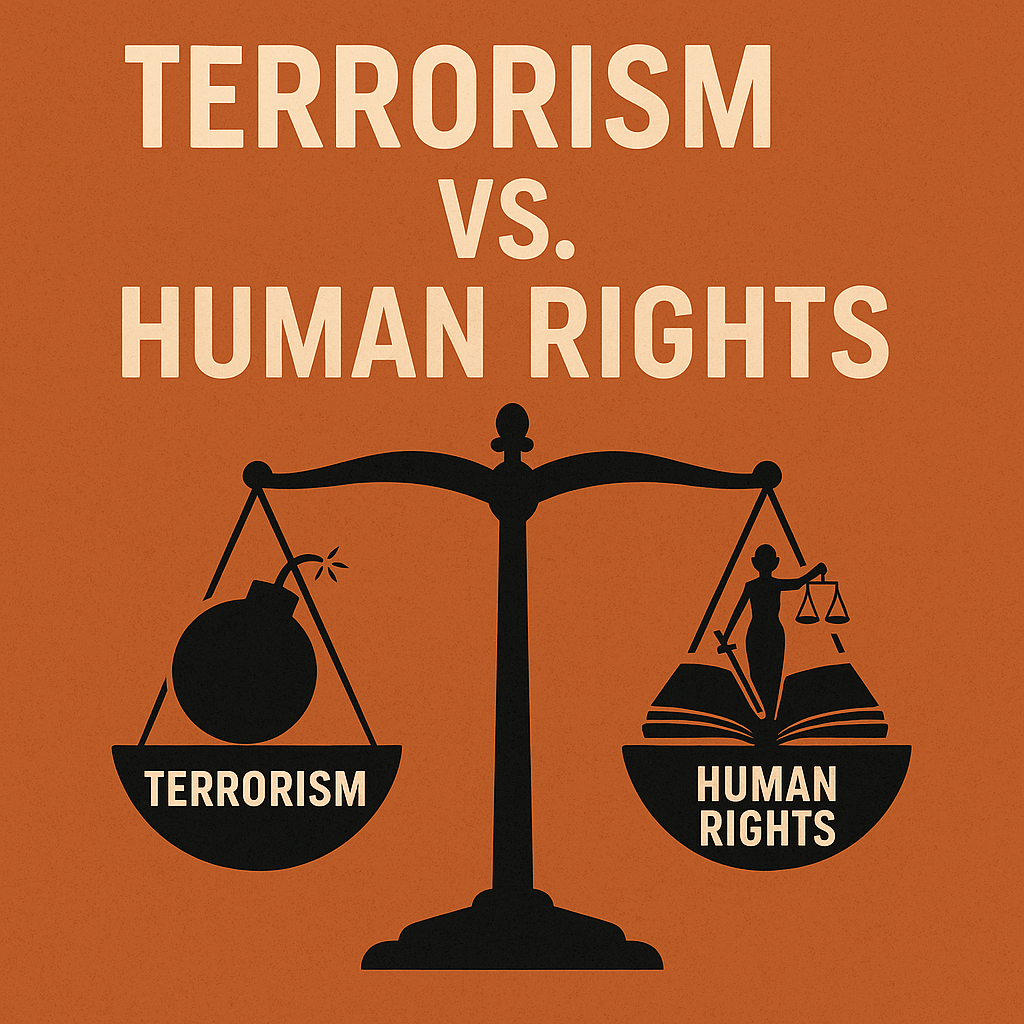
By Advocate Amaresh Yadav
Supreme Court of India | Constitutional Law Expert | Human Rights Commentator
Introduction
In an increasingly polarized world, where governments are under pressure to secure borders, combat extremism, and maintain order, counter-terrorism laws have emerged as essential tools. But when these tools begin to erode the very civil liberties they were designed to protect, democracies face a fundamental crisis.
As a practicing advocate before the Supreme Court of India, I have observed a troubling pattern: the expansion of anti-terror laws at the cost of constitutional guarantees, minority rights, and judicial accountability. This phenomenon is not unique to India—it is global in scope and urgent in nature.
The Global Dilemma: Security vs Civil Liberties
Across jurisdictions, from the USA’s Patriot Act to the UK’s Prevent Strategy, and India’s UAPA, states have granted themselves broad powers to preempt threats. But legal scholars and human rights organizations have consistently raised alarms: vague definitions, indefinite detentions, and unchecked executive powers are undermining democratic frameworks.
In A. and Others v. United Kingdom, the European Court of Human Rights held that the indefinite detention of foreign nationals suspected of terrorism, without trial, violated Article 5 of the European Convention on Human Rights. The ruling reaffirms a global principle: national security cannot override fundamental legal safeguards.
India’s Experience: A Case of Legislative Overreach?
India’s primary counter-terror legislation, the Unlawful Activities (Prevention) Act (UAPA) and the National Security Act (NSA), empowers the state to detain individuals on mere suspicion of unlawful or “anti-national” activity.
While intended to protect national integrity, the application of these laws has raised serious concerns:
- Extended pre-trial detentions without charges.
- Low evidentiary thresholds, often based on loose interpretations of ideology or speech.
- Targeting of minorities, activists, and dissenters, leading to accusations of political misuse.
Recent cases, such as the arrest of human rights defender Khurram Parvez under UAPA and the renewed FIR against author Arundhati Roy over a 2008 speech on Kashmir, highlight how anti-terror frameworks are being used to silence criticism rather than combat actual terrorism.
Minority Rights and Disproportionate Impact
Globally, marginalized communities often bear the brunt of national security laws. In India, Muslim citizens form a disproportionately high percentage of those arrested under UAPA, despite low conviction rates. This trend not only violates the principle of non-discrimination, it erodes faith in the justice system and deepens communal divides.
Such patterns echo international findings by the UN Special Rapporteur on Human Rights and Counter-Terrorism, which warn that poorly framed laws often criminalize dissent and suppress civil society.
The Judiciary’s Role: Safeguard or Bystander?
India’s higher judiciary has historically acted as a check on executive overreach. However, in recent years, critics have noted a lack of robust judicial scrutiny in cases involving national security.
The difficulty in securing bail under UAPA, coupled with the delayed trials and extended custody, has led many to question whether the presumption of innocence still holds in practice.
A democratic society demands a proactive and courageous judiciary—one that upholds the Constitution even in times of perceived threat.
Recommendations for Reform
To realign anti-terror laws with democratic values, the following measures are essential:
- Precise legal definitions of terrorism and unlawful activity.
- Judicial oversight of executive actions and detentions.
- Time-bound trials and bail hearings, especially in non-violent cases.
- Protection of political expression and dissent under Article 19 of the Indian Constitution and Article 19 of the UDHR.
- Regular legislative reviews in line with international human rights obligations.
Conclusion: A Call for Constitutional Balance
As Justice H.R. Khanna famously reminded us during the Emergency era, “Even in times of emergency, the rule of law must prevail.” We cannot allow the language of national security to be used as a veil for suppressing rights and liberties.
Terrorism must be fought—but it must be fought within the framework of constitutional morality and international legality. If we allow fear to dictate our legal standards, we risk transforming democracies into regimes of surveillance and silence.
It is time for legal systems, legislators, and citizens to demand accountability, uphold transparency, and reaffirm the promise of human rights—both in India and across the globe.
About the Author
Advocate Amaresh Yadav
Supreme Court of India
Constitutional Law Expert | Human Rights Defender | Legal Writer
SEO Keywords (suggested for WordPress):
Anti-Terror Laws, Human Rights in India, UAPA Debate, Indian Judiciary and Human Rights, Global Counterterrorism Laws, Rule of Law, Free Speech and National Security
Meta Description:
Are anti-terror laws becoming tools of suppression? Advocate Amaresh Yadav of the Supreme Court of India explores the legal, constitutional, and human rights tensions between security and liberty—both in India and globall
 Amaresh Yadav
Leave a comment