The Tug of Institutions: Judiciary vs Executive in India and the U.S.
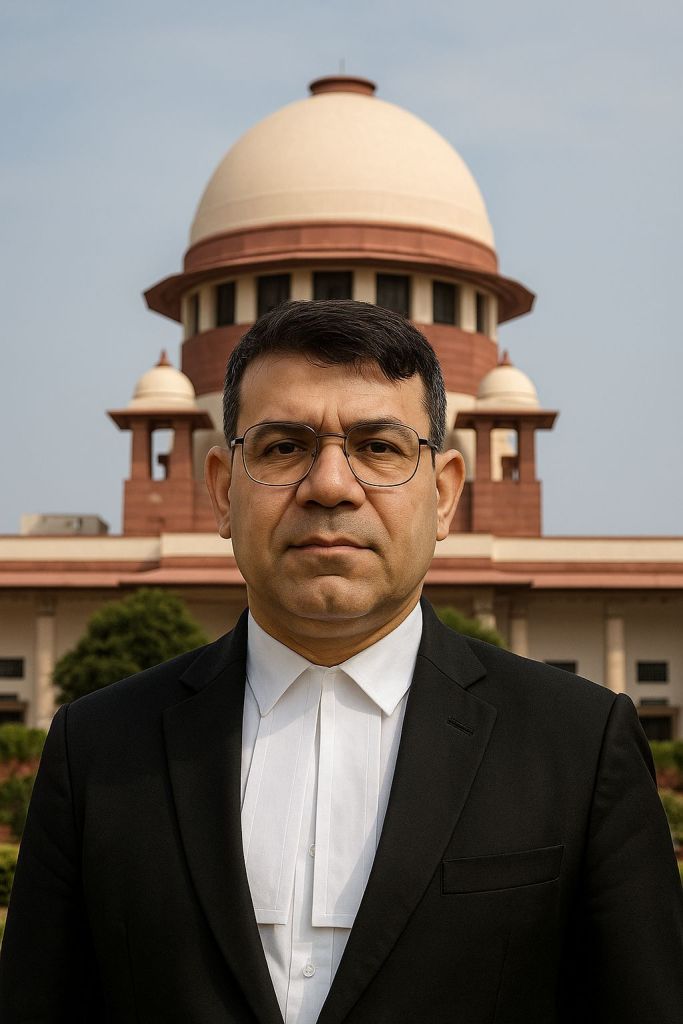
By Advocate Amaresh Yadav
In every robust democracy, friction between the judiciary and the executive is not only inevitable — it is essential. Yet, the recent confrontations involving India’s Vice President Jagdeep Dhankhar and U.S. Vice President JD Vance signal a worrying escalation that challenges the equilibrium envisioned by constitutional frameworks in both nations.
The Indian Context: The Burden of Interpretation
India’s Constitution grants the judiciary the solemn role of interpreting laws. However, when Vice President Dhankhar questions judicial timelines given to the President and terms the judiciary a “super Parliament,” he voices a sentiment long held by parts of the political class: the fear of judicial overreach.
But is it truly overreach, or a constitutional correction mechanism?
In a nation where executive inertia has often delayed justice — be it in electoral reforms, governors’ appointments, or legislative inaction — the courts have stepped in, not out of ambition, but out of necessity. The judiciary is the custodian of the Constitution when Parliament falters. Its intervention, though unelected, is neither unaccountable nor undemocratic — it is foundational.
Yet Dhankhar’s critique touches upon a valid procedural concern: Should constitutional benches and articles like 145(3) and 142 be revisited in the context of a larger Supreme Court bench today? That’s a debate worth having — but not one that should weaken the moral authority of the judiciary.
The American Scene: War on “Activist Judges”
Across the Atlantic, JD Vance has echoed similar criticisms, albeit with more aggression. His backlash against judges for thwarting executive actions — particularly in immigration and deportation matters — paints a dangerous picture. He labelled judges as “activists,” questioned their loyalty to due process, and signaled that courts should not challenge populist mandates.
Ironically, the U.S. judicial tradition, especially at the appellate level, has historically been conservative in tone, but assertive in principle. Judge Wilkinson’s opinion defending constitutional fidelity — even if it meant overriding the executive — is a reminder that courts are not there to please governments; they are there to constrain them when needed.
In both countries, the executive’s discomfort stems not from a rogue judiciary, but from a judiciary doing its job.
Constitutional Logic and Democratic Ethos
The Constitution in both India and the U.S. was designed with a healthy mistrust of concentrated power. The judiciary’s independence is not a footnote — it is a fulcrum.
Article 142 of the Indian Constitution, often derided for giving the Supreme Court sweeping powers to do “complete justice,” is not a flaw; it is a constitutional valve. In America, similar logic underpins judicial review stemming from Marbury v. Madison. These powers were never meant to be used lightly — and in both countries, they rarely are.
The executive, however, cannot cherry-pick compliance with court orders. That sets a dangerous precedent. When the government shrugs off judicial directions, it invites constitutional decay.
The Real Danger: Institutional Contempt and Public Distrust
What Dhankhar and Vance both represent is a growing global trend — political leaders undermining judicial legitimacy to build populist narratives. While institutions must always be scrutinized, they should not be vilified.
Judicial accountability does not mean subservience to the executive. Nor should executives be immune from judicial oversight simply because they were elected.
Conclusion: Balance, Not Supremacy
Democracy thrives on separation of powers, not the supremacy of one institution over another. The answer is not to reduce the judiciary’s role, but to strengthen all institutions through transparency, efficiency, and mutual respect.
The courts, too, must show restraint, avoid moral grandstanding, and act within constitutional bounds. But they must never retreat from their duty — especially when the Constitution is at risk.
In both India and the United States, the people expect neither messianic judges nor infallible executives. They want justice, governance, and constitutional order — delivered through a system that works, argues, evolves, and most importantly, respects its own limits.
Before this tug of war becomes a constitutional tear, all sides must remember: democracy is not a battleground — it’s a balancing act.
 Amaresh Yadav
Leave a comment